


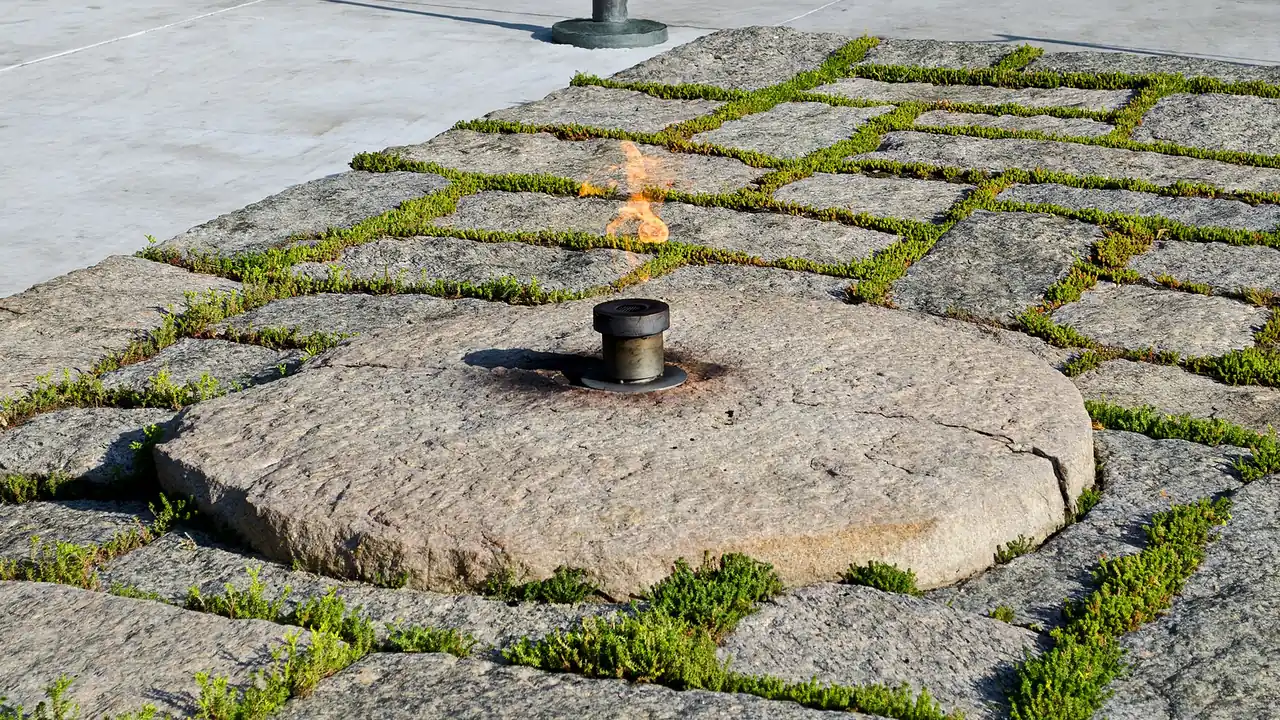
Nine members of the Kennedy family went to federal court in Washington on Tuesday to stop President Donald Trump's planned 250-foot arch near Arlington National Cemetery. Their central claim is simple and visual: the structure would throw a shadow across John F. Kennedy's grave.
They are not the first to sue. They are the most symbolically powerful plaintiffs yet, and their filing leans on a newspaper's shadow analysis that turned an architecture debate into a story about a grave.
Key Takeaways
- Nine Kennedy family members asked to join two existing lawsuits against the arch
- Their 27-page complaint says it would "permanently cast a shadow" over the Kennedy graves
- A Washington Post analysis found the shadow would reach JFK's eternal flame and memorial
- The White House called the move "unfortunate" and says it expects to be vindicated
What the Kennedys are asking for
According to Forbes, the family requested to join two lawsuits already challenging the monument. Their accompanying complaint argues the arch would shadow the Kennedy gravesites and the graves of service members buried nearby.
TIME reports the family also argues the arch would obstruct views of the gravesites. NPR notes the filing explains why the family chose Arlington in the first place: so the president's grave would stay open and accessible to the public.
The shadow analysis behind the case
The legal argument rests on geometry. The Washington Post modelled the planned structure and found its shadow would fall on both the eternal flame and Kennedy's memorial. Forbes, citing the same analysis, reports the shadow would touch burial sites in the cemetery on 284 days a year.
The arch is planned for Memorial Circle, the traffic circle at the Virginia end of Memorial Bridge. That bridge was built to link the Lincoln Memorial with Arlington, which is exactly the sightline critics say the arch would interrupt.
A crowded courtroom
The Kennedys join a growing list of challengers. A group of Vietnam War veterans and an architectural historian sued in February. In October, the Associated Press reported that Arlington County became the first government body to sue, accusing the National Park Service of racing toward construction without required environmental reviews.
The administration is not backing down. White House spokesperson Davis Ingle called the family's move "unfortunate" and said the administration is confident it will be "fully vindicated" as the case proceeds.
What to watch next
- Whether the court lets the Kennedys join the existing cases, which would merge the challenges.
- Any ruling on pausing construction while the lawsuits are heard.
- The federal planning review of the arch's final designs.
- Whether more families with graves at Arlington follow the Kennedys into court.
For readers outside the US, the dispute can look like a local planning row. It is really a test of how far a president can reshape a capital's national memorials without Congress.
The answer will come from a judge, not a vote. And the most memorable exhibit in the case is a grave that has drawn visitors from around the world since 1963.
Cover photo: Tim Evanson, via Wikimedia Commons (CC BY-SA 2.0).

Reader Discussion