


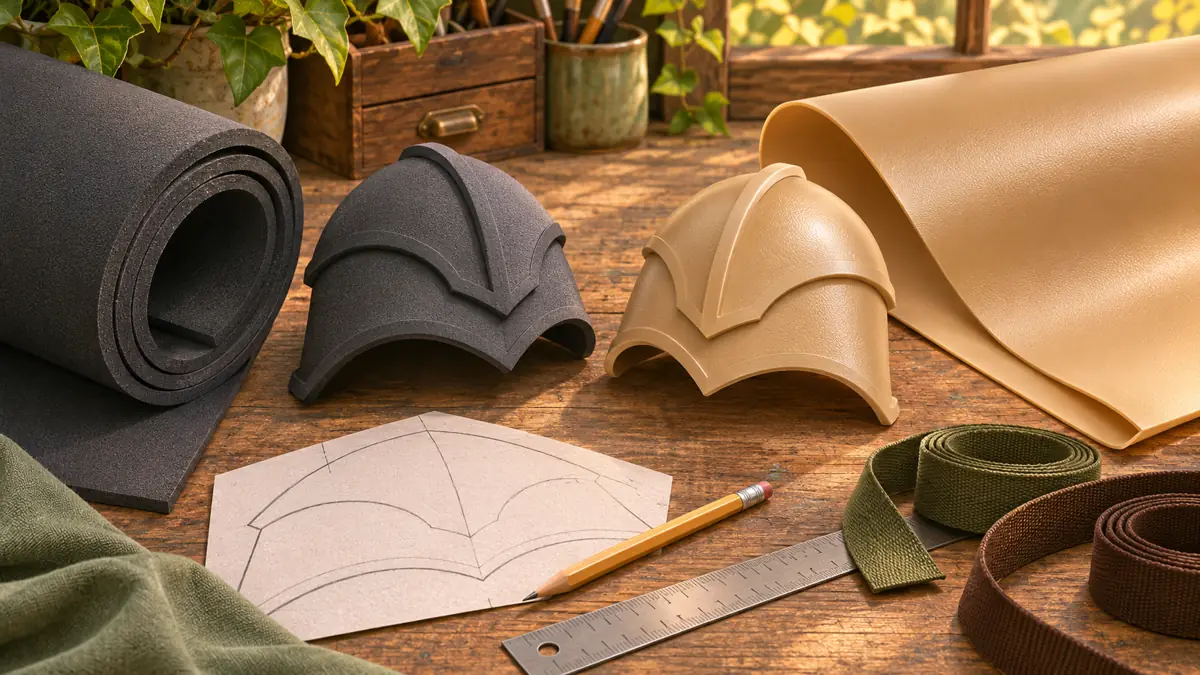
The armour looks like metal in the reference picture. That does not mean the material underneath has to be hard, heavy or expensive.
For a first broad, wearable armour piece, EVA foam is a sensible starting option. Consider Worbla when you specifically want a rigid, heat-shaped shell or sculpted detail. That is a starting recommendation, not a rule that one material is always “beginner” and the other always “professional.”
The better first question is what the piece needs to do when you wear it.
Start with one shoulder, not the whole suit
Choose a small piece you can finish and move in. A shoulder plate is a useful planning exercise: it needs a recognisable shape, somewhere for straps to attach and enough clearance to lift your arm.
Make a paper or card mock-up before committing the final material. Hold it where you intend to wear it. A beautiful outline can still collide with your neck or another panel when you turn.
This is a proposed practice exercise, not a claim that we built or tested the pictured pieces. The cover is a conceptual illustration.
What EVA foam lets you practise
Punished Props’ foam armour guide provides a practical foundation for working with foam. For a newcomer, its appeal is that you can approach a shape through patterns, joined sections and layered details.
That makes the learning process visible. If a curve looks wrong, you can revisit the pattern. If an edge looks untidy, the finishing work is something you can practise on a small offcut before repeating it across an entire costume.
Do not buy solely by the word “foam.” Thickness, density and intended use vary. Match the material to the tutorial or pattern you are following rather than assuming every sheet will behave the same way.
What changes with Worbla?
Worbla’s description of Finest Art says the sheet becomes workable when heated and rigid when cool. It can be reshaped and its scraps reused. It can also be formed over a base, including foam.
That makes it useful when the shell itself needs to hold a shape. It also introduces a different set of tasks: controlling the shape during cooling and preparing the surface for the finish you want.
Finest Art has a textured surface. If your reference calls for smooth painted metal, allow time for surface preparation. A material purchase does not remove that stage of the build.
You can combine them
This does not have to be a contest between two complete costumes. Kamui Cosplay documents a Wonder Woman build using both Worbla and foam. A project can use different materials for different jobs.
For your own plan, write a reason beside each choice. “This section needs to stay rigid” is useful. “Someone online said serious cosplayers use it” is not.
Budget for the finish and the fit
Before ordering, list the pattern, material, adhesive, surface preparation, paint and attachment system. Compare the total project cost locally; a universal price-per-costume claim would be misleading.
Follow the material and adhesive manufacturers’ handling guidance, including ventilation and heat precautions. Do not heat-form pieces directly on your body. A quick comparison article cannot replace a safe, product-specific tutorial.
Then finish the small test piece and try it on. Sit, reach and turn. The right material is the one that helps you make something convincing that you can actually enjoy wearing.


Reader Discussion