


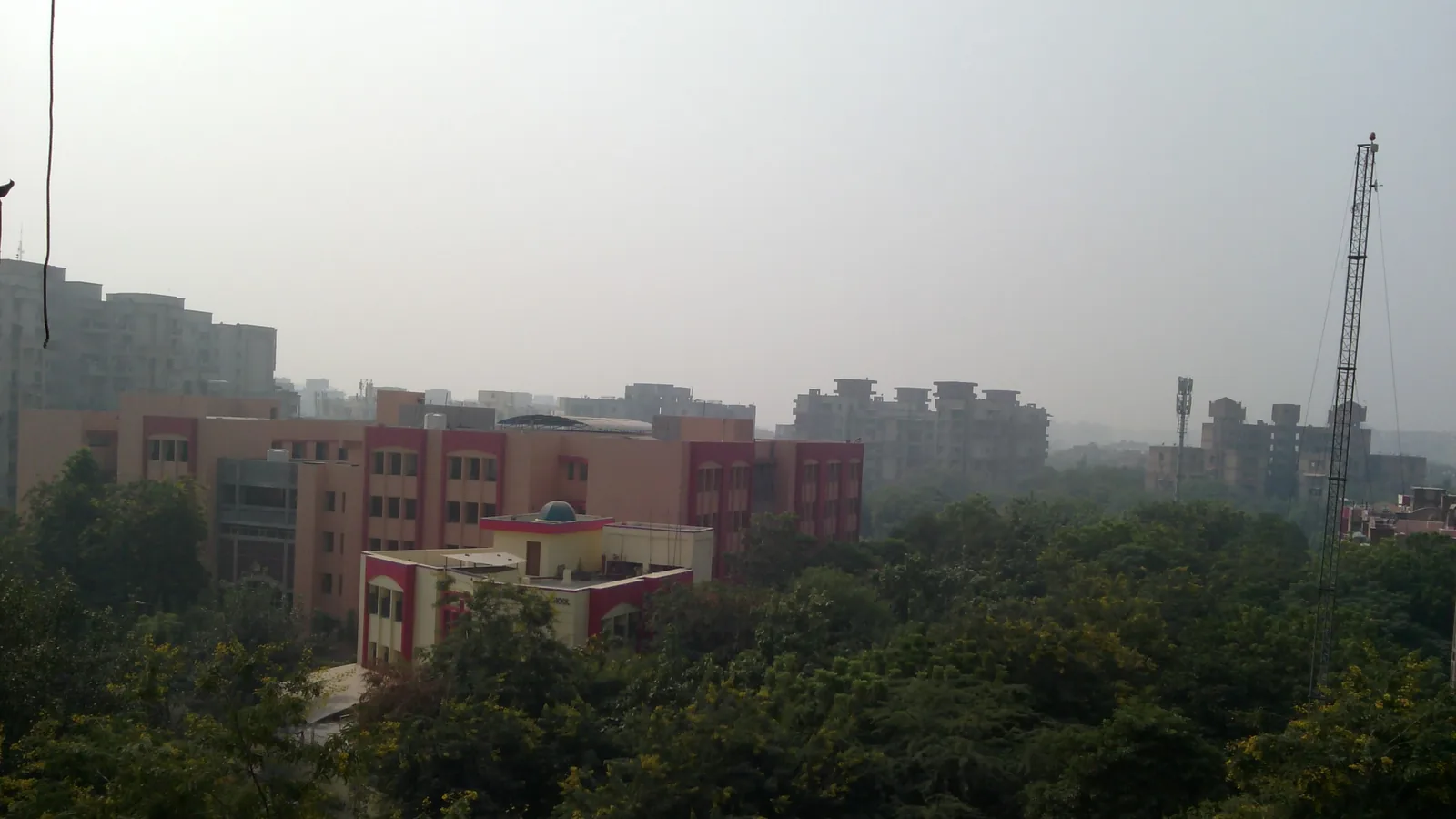
A thick, pungent veil of toxic smog settled across the National Capital Region following Diwali celebrations. Central Pollution Control Board monitoring stations recorded a citywide average Air Quality Index of 366. Thirteen industrial and residential zones plunged into the hazardous 'Severe' category above 400. For millions of residents, the morning air brought stinging eyes, tight chests, and a familiar annual public health emergency.
Key Takeaways
- Severe Regional Hotspots: While the capital's overall average stood at 366, thirteen stations recorded AQI figures above 400, led by Anand Vihar, Wazirpur, and Rohini.
- A Chronic Pattern: Atmospheric data confirms Delhi's post-Diwali air worsened in eight of the last nine years, proving seasonal weather inversions amplify surface emission surges.
- Emergency Transport Rules: GRAP Stage 3 restrictions ban older diesel and petrol passenger vehicles across Delhi-NCR roads, backed by steep fines for non-compliance.
- Systemic Medical Danger: Leading pulmonologists warn that PM2.5 particulates penetrate deep lung tissue, triggering acute respiratory distress while elevating long-term risks for cardiovascular events and insulin resistance.
The Morning After: Thirteen Stations Breach the 400 Mark
Delhi woke up to visibility under 400 meters. The morning sun appeared as a dull copper disc through heavy grey haze. While citywide figures averaged 366, local neighborhoods experienced far more extreme conditions. Real-time CPCB monitors recorded severe spikes across key transit and industrial corridors:
- Anand Vihar: 424 AQI (Severe)
- Bawana: 418 AQI (Severe)
- Jahangirpuri: 412 AQI (Severe)
- Wazirpur: 410 AQI (Severe)
- Rohini: 406 AQI (Severe)
- Vivek Vihar: 402 AQI (Severe)
The spike fits an established meteorological pattern. According to environmental research by Down To Earth, Delhi-NCR air quality worsened the morning after Diwali in eight of the past nine years. Winter approaches. Calm surface winds drop below five kilometers per hour. Mixing height shrinks. Stubble burning plumes drift across Punjab and Haryana. Firecracker smoke enters this stagnant dome. The pollutants have nowhere to disperse.
Understanding CPCB Air Quality Benchmarks
The Central Pollution Control Board categorizes air quality into six color-coded health tiers. Each bracket reflects distinct physiological consequences for the public:
| AQI Range | Category | Health Warning |
|---|---|---|
| 0 – 50 | Good | Minimal health impact. |
| 51 – 100 | Satisfactory | Minor breathing discomfort to sensitive individuals. |
| 101 – 200 | Moderate | Breathing discomfort for patients with asthma and heart conditions. |
| 201 – 300 | Poor | Breathing discomfort to most people on prolonged exposure. |
| 301 – 400 | Very Poor | Respiratory illness on prolonged exposure; severe effect on chronic patients. |
| 401 – 500 | Severe | Affects healthy people and severely impacts individuals with existing diseases. |
When values cross 400, healthy lungs struggle. Fine particulate concentrations exceed World Health Organization daily safety guidelines by more than twenty times.
Emergency Response: What GRAP Stage 3 Curbs Enforce
With multiple stations entering the severe bracket, the Commission for Air Quality Management (CAQM) invoked Stage 3 of the Graded Response Action Plan (GRAP). These emergency rules impose strict prohibitions across Delhi and adjacent districts in Gurugram, Faridabad, Ghaziabad, and Noida:
- Vehicle Prohibitions: A strict ban on private BS-III petrol and BS-IV diesel four-wheelers. Violators face spot fines up to 20,000 rupees.
- Construction Freeze: All demolition, earth excavation, and civil construction activities are suspended. Critical public infrastructure projects like metro rail and hospitals operate under stringent dust suppression guidelines.
- Industrial Curbs: Brick kilns, hot-mix plants, and stone crushers operating without clean fuel authorization are sealed.
- Road Cleaning: Municipal corporations deployed intensified mechanical vacuum sweepers and high-pressure water sprinkler tankers along heavy traffic corridors.
The Medical Threat: Why Pulmonologists Call PM2.5 a Silent Killer
The immediate hazard is not visible dust. It is microscopic PM2.5. These ultra-fine particles measure less than 2.5 micrometers in diameter, roughly one-thirtieth the width of a human hair. Because of their tiny size, nasal hairs and mucus membranes cannot trap them.
They travel straight into the pulmonary alveoli. From there, they cross into the bloodstream. Medical specialists interviewed by Open Magazine emphasize that pollution is no longer merely a pulmonary crisis. It is a systemic vascular disease. Chronic exposure causes micro-inflammation across blood vessels, stiffening arteries and increasing the probability of strokes and ischemic heart attacks.
Recent epidemiological research highlights an alarming correlation between prolonged particulate exposure and metabolic dysfunction. Toxic air elevates systemic cortisol and inflammatory cytokines, worsening insulin resistance and accelerating diabetes progression in vulnerable urban populations.
Doctor-Approved Safety Guidelines for Residents
Navigating Delhi's toxic winter air requires deliberate daily discipline. Medical practitioners recommend five concrete protective measures:
1. Ditch Cloth Masks: Cloth and standard surgical masks filter less than 15% of PM2.5. Wear a certified N95 or N99 respirator with a secure nose-clip.
2. Halt Morning Jogs: Inversion traps maximum toxic particulate density between 5:00 AM and 8:30 AM. Move cardio workouts indoors.
3. Seal Indoor Living Spaces: Keep windows shut during peak morning and night hours. Run HEPA air purifiers in sleeping quarters.
4. Saline Nasal Irrigation: Flush upper airways with sterile saline rinse after returning from outside.
5. Hydrate & Monitor Symptoms: Drink warm water regularly. Seek immediate medical attention for persistent wheezing, chest tightness, or oxygen saturation dips below 95%.
Delhi faces a long winter. Curbing air pollution requires year-round regional cooperation across agriculture, transport, and energy generation. Until structural reforms take hold, personal protection remains the first line of defense for every citizen breathing the capital's air.
Frequently Asked Questions
What was Delhi's average AQI after Diwali?
Delhi recorded a 24-hour average Air Quality Index of 366 ('Very Poor'), with 13 local stations crossing 400 into the hazardous 'Severe' category according to Central Pollution Control Board data.
Which vehicles are banned under GRAP Stage 3 in Delhi-NCR?
GRAP-3 bans the operation of BS-III petrol and BS-IV diesel four-wheelers across Delhi, Gurugram, Faridabad, Ghaziabad, and Noida, with traffic police imposing 20,000 rupee fines on violators.
Do standard surgical or cloth masks protect against Delhi smog?
No. Surgical and cloth masks allow fine PM2.5 particles to bypass fabric weaves and enter the lungs. Doctors advise using certified N95 or N99 respirators that form an airtight seal against the skin.
Why does Delhi's air quality worsen every year after Diwali?
Calm winter surface winds, low temperatures, and atmospheric inversions trap regional emissions. When festive firecracker smoke combines with seasonal crop residue burning, pollutants accumulate near the ground rather than dispersing.

Reader Discussion