


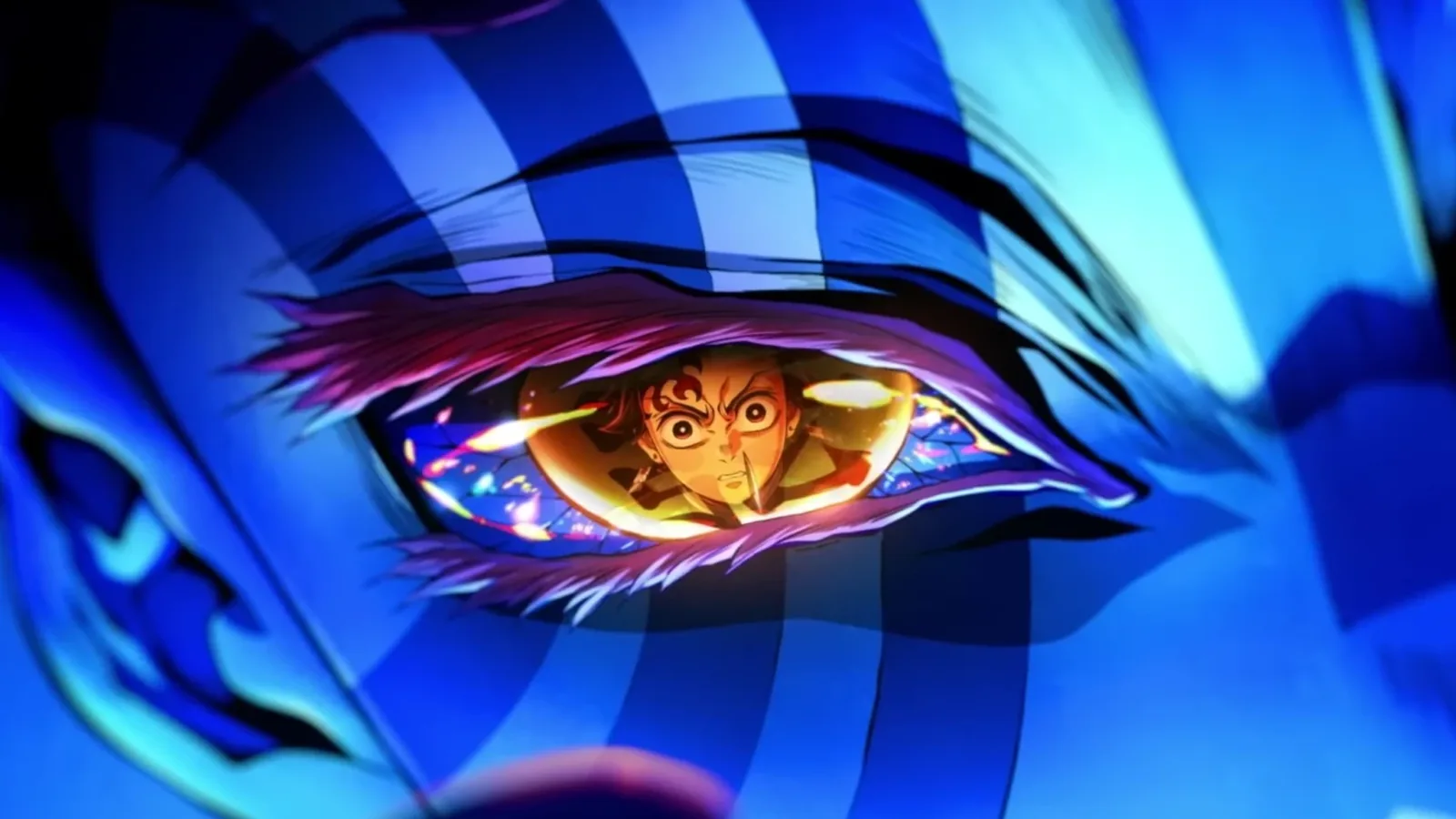
Ask why Demon Slayer looks better than almost every other TV anime and most answers point at the drawings. The real answer sits one step later in the pipeline, in a stage called compositing, and ufotable treats it unlike any other studio.
Understanding that one stage explains the water effects, the camera moves, and why no rival show has managed to copy the look in six years of trying.
Key Takeaways
- Compositing is the final stage where drawings, backgrounds, 3D, lighting and effects merge into one shot
- At most studios it is a quick technical step; ufotable runs it as a full creative department
- Series director Haruo Sotozaki's team calls this photography work "Satsuei"
- The Infinity Castle itself is 3D, with hand-drawn characters composited inside it
What compositing actually means
Every anime shot is a stack of layers: character drawings, painted backgrounds, effects, light. Compositing is where the stack becomes a single image, with colour, glow, focus and camera movement applied.
In an interview with Gizmodo, Castlevania directors Sam and Adam Deats singled ufotable out: the studio runs an unusually strong photography department, Demon Slayer is heavily composited, and the team does "tons of polishing on the backend". Most shows spend a fraction of that effort on the same stage.
The Satsuei secret
The studio itself says the same thing. In comments reported by Sportskeeda, a Demon Slayer director credited Satsuei, the photography and compositing stage, as a hidden ingredient of the show's look.
That is where the signature effects live. The flowing water of Tanjiro's sword forms, the glowing embers, the painterly skies: drawn elements, treated as light sources and blended in compositing until they sit naturally inside the frame.
Where the 3D comes in
Demon Slayer also leans on 3D more than fans assume, and compositing is what hides the seams. Popverse broke down how the Infinity Castle's folding, rotating halls are rendered in CG while the demon inside them stays hand-drawn, and called the blend the best-looking material in that film.
Reviewing the Infinity Castle movie, RogerEbert.com described it as a perfect showcase of ufotable's house blend of 2D and 3D. The castle sequences simply do not work without a compositing team strong enough to weld the two together.
How to spot it yourself
- Pause any fight scene: the characters are flat drawings, but the light wrapping them changes per frame. That is compositing.
- Watch the camera: when it swings around a character in mid-air, the environment is 3D and the character is drawn to match.
- Compare a quiet scene with another show's. Demon Slayer keeps the depth-of-field and colour grading even when nothing is exploding.
- Rewatch the Infinity Castle sequences knowing the halls are CG. The join is almost impossible to find.
None of this diminishes the animators. The drawings are excellent, and the sound and music carry their share.
But the trap for every studio chasing this look is that it cannot be copied by hiring better artists alone. It needs a department most studios run as an afterthought, promoted to the heart of the pipeline.
Reader Discussion