
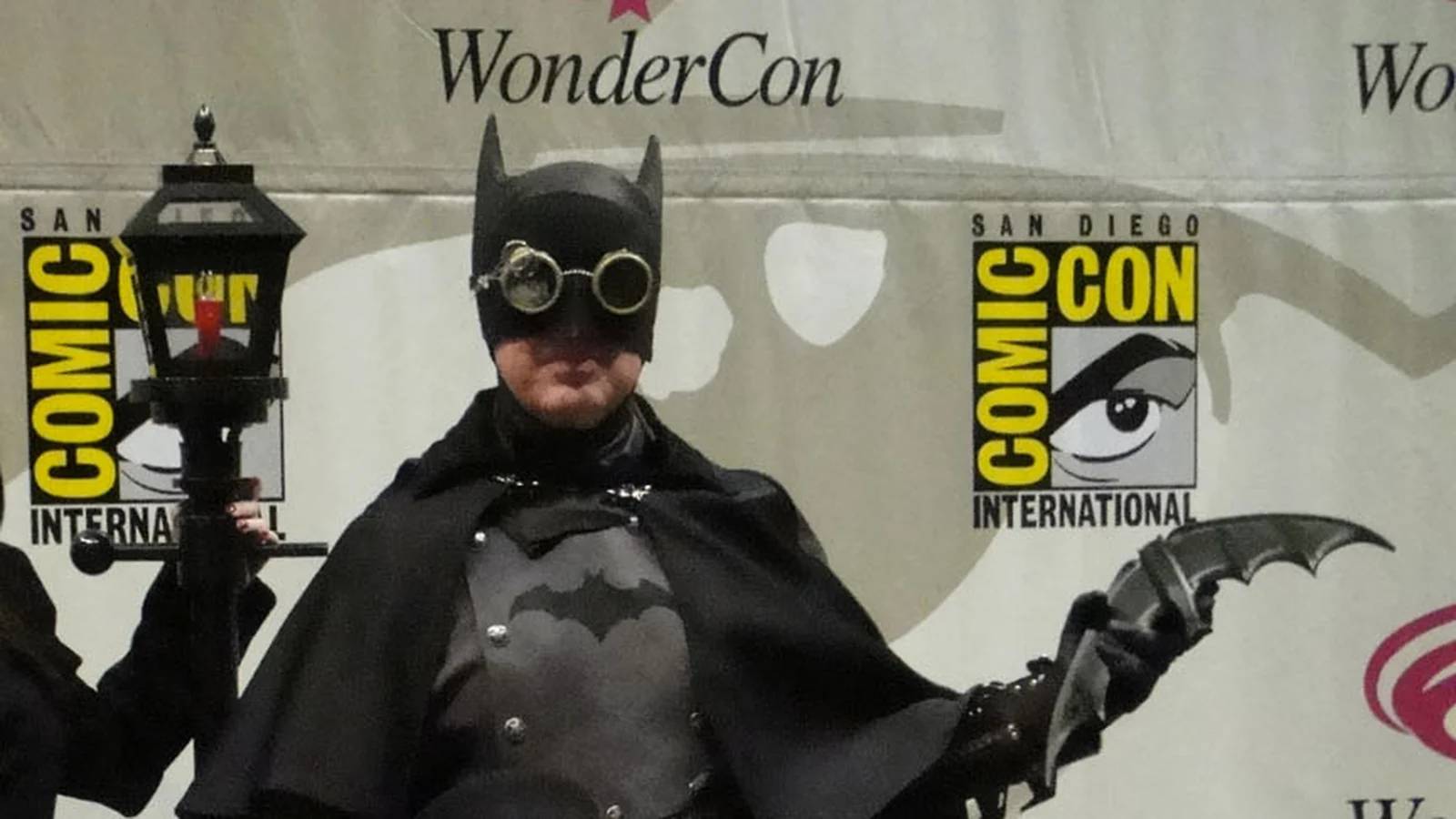
Batman in Victorian Gotham. Superman raised in the Soviet Union. Bruce Wayne wearing a Green Lantern ring. These are not chapters you somehow missed in one long biography.
DC Elseworlds stories place familiar characters in alternate settings outside traditional continuity. A change in one of these books does not automatically rewrite the Batman or Superman in another series.
The pleasure is in the changed premise
DC's explanation of Elseworlds describes an imprint that lets creators move characters beyond their usual circumstances. The label gives you permission to begin with a different question: what happens to this hero if the world around them changes?
The official Elseworlds collection includes Soviet Superman and Green Lantern Bruce Wayne premises. These are separate starting points, not a reading order in disguise.
Our reading of the appeal: the familiar character gives you something to recognise, while the changed setting gives the story something to test. A new costume may catch your eye. The more interesting question is which decisions the character will make differently.
Gotham by Gaslight explains the label's history
DC traces the imprint's emergence to Batman: Gotham by Gaslight, which places Batman in a Victorian setting. Its history makes a useful distinction: the original book received the Elseworlds label on a later printing; Batman: Holy Terror was the first comic to carry the logo on its initial release.
In other words, the story that helped inspire the line and the first book to launch with its branding are not the same thing.
That is enough background to understand the label. You do not need to memorise a publication timeline before choosing a story.
Pick a book, then check its connections
Outside traditional continuity does not mean every book stands alone. DC's Elseworlds collection lists three issues of Justice League of America: The Nail and a separate three-issue JLA: Another Nail. Check the volume and its contents before assuming you are buying the whole story.
For a first book, start with the setting that genuinely interests you. Read the publisher's synopsis and the collection's contents. Does it contain a complete story, or is it an installment in a longer run?
That check is more useful than treating Elseworlds as one giant series. The label does not put every alternate Batman into the same timeline, and it does not promise that every volume is self-contained.
Keep the medium in mind, too: a comic, a television crossover and a film can use similar language without sharing continuity. Look for a connection in the specific book or announcement, rather than assuming one from the name.
Reader Discussion