

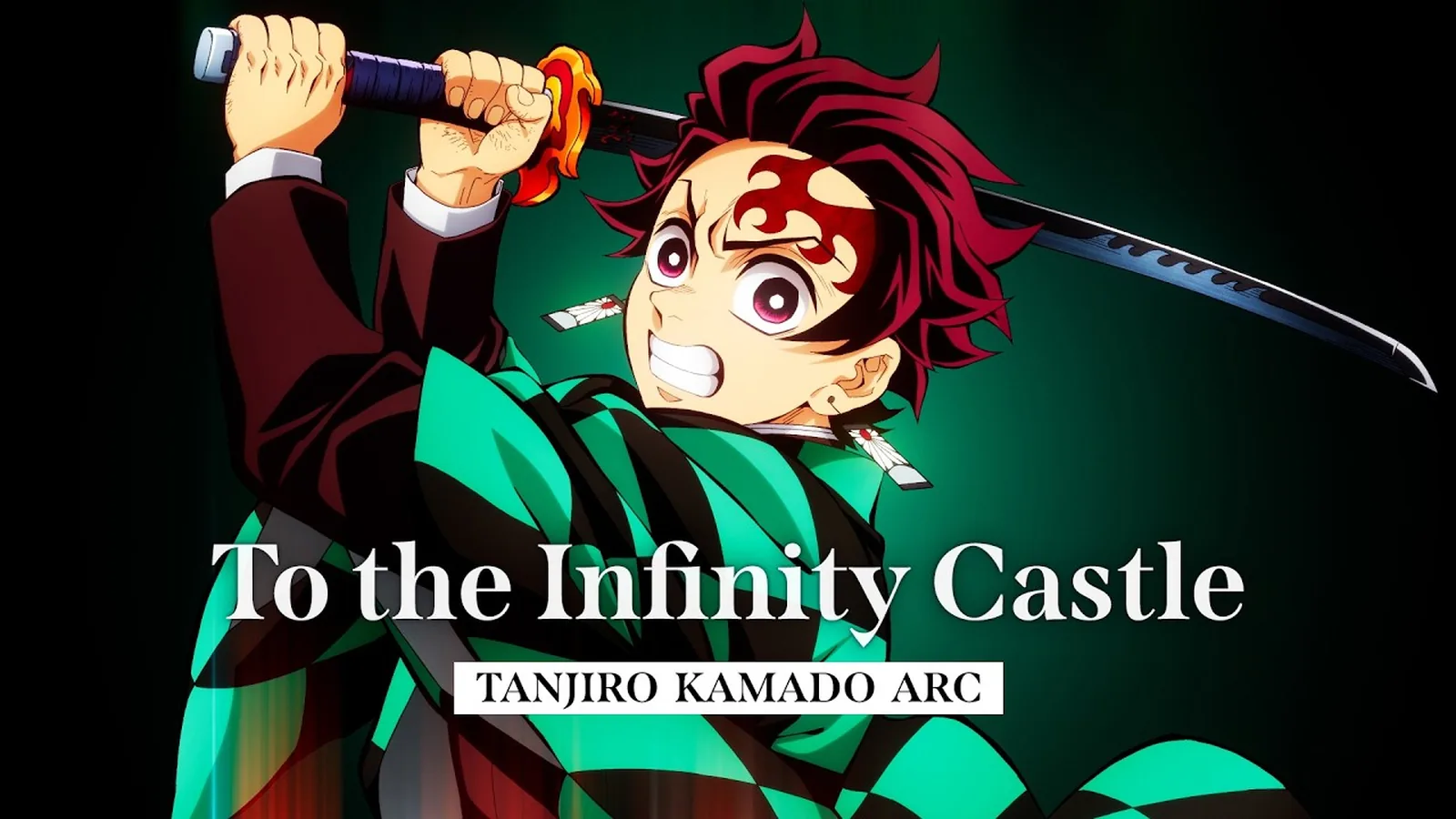
The unveiling of the demon slayer infinity castle movie trilogy release model confirmed what production insiders had suspected for months: prestige anime has outgrown late-night linear television. By locking the final arc of Koyoharu Gotouge's manga behind three feature-length theatrical installments, Aniplex and Sony Pictures have abandoned the traditional broadcast schedule entirely. This decision changes how premium shonen properties will be produced, financed, and consumed worldwide.
Key Takeaways
- Direct-to-Theater Economics: Box office receipts yield significantly higher per-viewer revenue than late-night Japanese television broadcasting and streaming licensing fees combined.
- Pipeline Optimization: Ufotable can design audio mixes and visual compositing natively for DCI-compliant cinema projectors rather than constrained broadcast standards.
- Consolidated Committees: The streamlined three-partner stakeholder structure allows Sony to orchestrate coordinated day-and-date global theatrical releases through Crunchyroll.
- The Precedent: Major production houses now view final arcs as self-contained cinematic events rather than multi-cour seasonal television orders.
The financial mechanics behind bypassing television
Television anime has long operated as a loss leader. Production committees historically poured money into late-night programming blocks across networks like Fuji TV and Tokyo MX to drive sales of manga volumes, character merchandise, and packaged Blu-rays. Demon Slayer: Kimetsu no Yaiba fundamentally broke that framework in 2020. When Mugen Train grossed over $507 million worldwide, it demonstrated that casual audiences would buy cinema tickets for canon story progressions.
The numbers make the pivot unavoidable. A successful single-cour broadcast run yields flat licensing fees from domestic networks and international streaming platforms. Conversely, theatrical runs return an estimated 40 to 55 percent of box office grosses directly to the distributor and committee. Sony owns both Aniplex, which leads the production committee, and Crunchyroll, which handles global distribution. That corporate alignment ensures Sony captures revenue at nearly every link in the value chain.
Splitting the arc into three films maximizes total addressable yield. The Infinity Castle manga material spans roughly 44 chapters of dense, non-stop battle sequences. Adapting this stretch into a standard two-cour television season would require roughly 24 episodes. By shifting that narrative runtime across three 100-minute films, the committee creates three distinct box office events. Each ticket sold generates direct revenue that dwarfed what ad-supported television could ever deliver.
| Metric | Standard Broadcast Cour | Theatrical Feature Model |
|---|---|---|
| Primary Revenue Engine | SVOD licensing and domestic network fees | Global box office admissions and IMAX surcharges |
| Target Audio Standard | Stereo or compressed 5.1 broadcast downmix | Native uncompressed 5.1, 7.1, and Dolby Atmos |
| Color & Luminance Pipeline | Rec. 709 with domestic broadcast bit-rate caps | DCI-P3 color gamut mastered for high-output digital projection |
| Release Cadence | Weekly episodic drops over 11 to 12 weeks | Multi-week theatrical exclusive windows spaced across years |
| Production Committee Size | Broad syndicates of 5 to 8 peripheral investors | Streamlined triads focused on distribution control |
Ufotable's technical pipeline unshackled from broadcast constraints
From an engineering perspective, television broadcast standards place strict limits on animation studios. Japanese broadcast regulations mandate hard ceilings on luminance shifts to prevent photosensitive epileptic seizures. Studios must deliberately dim high-contrast scenes and lower frame rates for televised airings. The home video releases typically restore these cuts months later. The theatrical screen removes those broadcast safety filters on day one.
Ufotable digital department director Yuichi Terao has spent years pushing digital compositing far beyond standard anime aesthetics. The studio builds complex 3D environments inside Autodesk Maya and renders dynamic camera paths with proprietary lighting layers. In a television workflow, aggressive video compression from linear networks smudges these intricate details. Dark sequences turn into murky banding artifacts on home televisions.
Cinema exhibition provides Ufotable with uncompressed DCI-P3 color gamuts and high-bitrate DCP delivery. The multidimensional architecture of the Infinity Castle demands massive spatial clarity. Countless moving staircases, shifting rooms, and sliding shoji doors require precise depth cues. Mastering these sequences natively for theatrical projection ensures lighting calculations and particle simulations retain their intended fidelity.
Sound design undergoes a similar leap in scope. Television broadcast feeds rarely deliver true discrete surround sound to end users. Cinema allows sound director Masafumi Mima to build true positional audio environments. The studio can pan complex blood demon art effects across multi-channel theater arrays. That immersion cannot be replicated on consumer television speakers.
The collapse of traditional production committee structures
The traditional production committee system was designed to spread financial risk across music labels, toy manufacturers, publishing houses, and talent agencies. When an anime bombed, no single company took the full hit. But when a project turns into a global juggernaut, that divided ownership structure creates gridlock. Too many voices fight over royalties, streaming windows, and regional rights.
Demon Slayer operates under a tiny, highly consolidated committee. Only three entities sit at the table: publisher Shueisha, animation studio Ufotable, and producer Aniplex. There are no toy conglomerates or terrestrial networks demanding creative compromises. This compact structure allows the group to make aggressive, high-risk tactical pivots quickly.
Because Aniplex controls the commercial rights, it can coordinate seamlessly with Sony Pictures for international theatrical distribution. In earlier decades, overseas rights were auctioned off piecemeal to regional distributors. That fragmentation delayed international releases by six to twelve months. Today, Sony treats an anime feature just like a Hollywood tentpole. The trilogy format enables synchronized global marketing blitzes that push IMAX and premium large-format screenings across dozens of territories at once.
How this strategy reshapes the broader anime sector
Other major animation studios are watching this deployment closely and adjusting their pipelines. MAPPA previously tested theatrical viability with Jujutsu Kaisen 0, which pulled in $166 million globally. They followed that by greenlighting Chainsaw Man: The Movie - Reze Arc instead of a traditional second television cour. Production I.G followed the exact same blueprint by packaging the climax of Haikyu!! into a two-part film project.
This dynamic creates a two-tiered anime production environment. Mid-tier adaptations and niche light novel projects will remain on standard weekly television schedules. They rely on domestic network exposure to gain traction. But prestige adaptations with established, passionate audiences will increasingly migrate to theaters for their climactic arcs.
Television is no longer the definitive home for peak shonen drama. It has become an incubation chamber. Studios run serialized seasons to build viewer attachment, hook social media algorithms, and establish the narrative stakes. Once the fan base reaches critical mass, the committee locks the exit behind a theater turnstile. Viewers will either buy a movie ticket or wait several months for the streaming window to open.
Will the Demon Slayer Infinity Castle trilogy ever come to streaming services?
Yes. After each film completes its standard theatrical run, it will arrive on streaming platforms. Sony-owned Crunchyroll will hold the exclusive first-window digital rights before any secondary platforms receive access.
Why did the producers choose three movies instead of a television season?
Theatrical films produce significantly higher profit margins per viewer than episodic television broadcasting. Three separate movies generate three distinct global box office runs while granting the animation team higher technical budgets and zero broadcast content restrictions.
Does this mean future anime seasons will be replaced by movies?
Only proven commercial hits will adopt this path. High production costs and distribution risks make movies impractical for unproven properties. However, established franchises like Chainsaw Man and Haikyu!! are already executing this exact theatrical strategy for critical story arcs.
How long will fans have to wait between each Infinity Castle movie?
Historically, feature-length anime film sequels require 12 to 18 months of production and post-production time between theatrical debuts. While Ufotable likely worked on early layouts concurrently, audiences should expect the complete trilogy release schedule to span multiple years.

Reader Discussion