

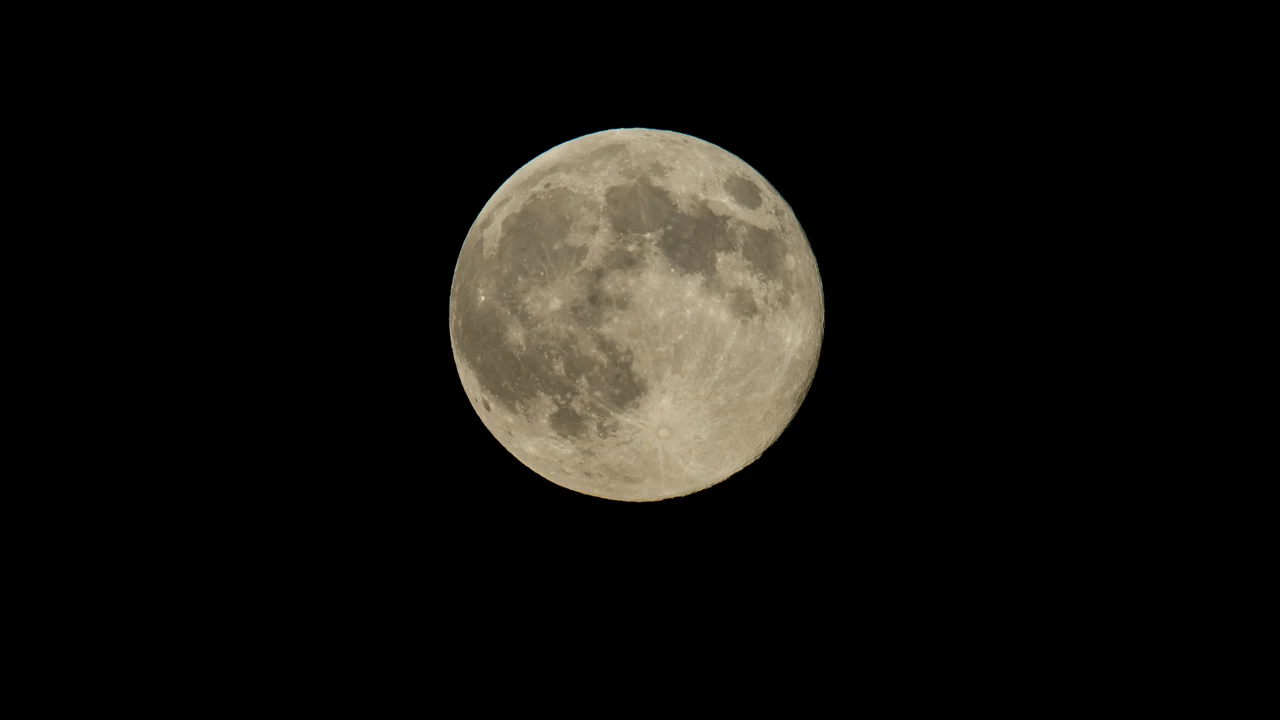
Set an alarm for 2:53 p.m. in London on Tuesday, November 24, and you’ll catch the exact minute of the full Moon. You’ll also be too early to see it rise. For a view of the Beaver supermoon, look up your town’s moonrise time and find a spot with a clear view to the east.
The two times tell you different things. The full phase happens at one instant for the whole Earth. Royal Museums Greenwich gives the UK time as 2:53 p.m., or 14:53 UTC. That’s 9:53 a.m. in New York and 8:23 p.m. in India. Moonrise, on the other hand, is when the Moon crosses your horizon. A clock conversion can give you the first answer. You need a location for the second.
Where to look this evening
Try the sky map linked from timeanddate’s November guide. Enter your town and select November 24. Look for the rise time, then think about what’s between you and the eastern sky. A tall building across the street can hide the Moon well past the minute on the calendar. A clear stretch of waterfront might give you the view you wanted from the start.
There’s another reason to go out early. As Live Science explains, the rising Moon shares the sky with the last light of day. You can still make out a roofline or a stand of trees beneath it. If clouds hide the first few minutes, give them a chance to pass. The round disk will still look full later that evening.
How much bigger will it look?
The Moon’s path around Earth is slightly oval. This month the full phase falls near the closer part of that orbit, so the disk takes up a little more of the sky. NASA calls “supermoon” an unofficial astronomical term. The dramatic size figures people quote compare opposite extremes of the orbit.
Try taking two photos tonight, one near moonrise and another when the Moon is higher. Keep the same lens and zoom setting. The low Moon may feel enormous next to a chimney, yet the disk can occupy much the same width in both pictures. That’s a satisfying thing to check with your own eyes.
Cover photo: An August 2014 supermoon photographed in Washington, D.C. by NASA’s Bill Ingalls. NASA / Bill Ingalls · Public domain. Framed and converted to WebP.


Reader Discussion