

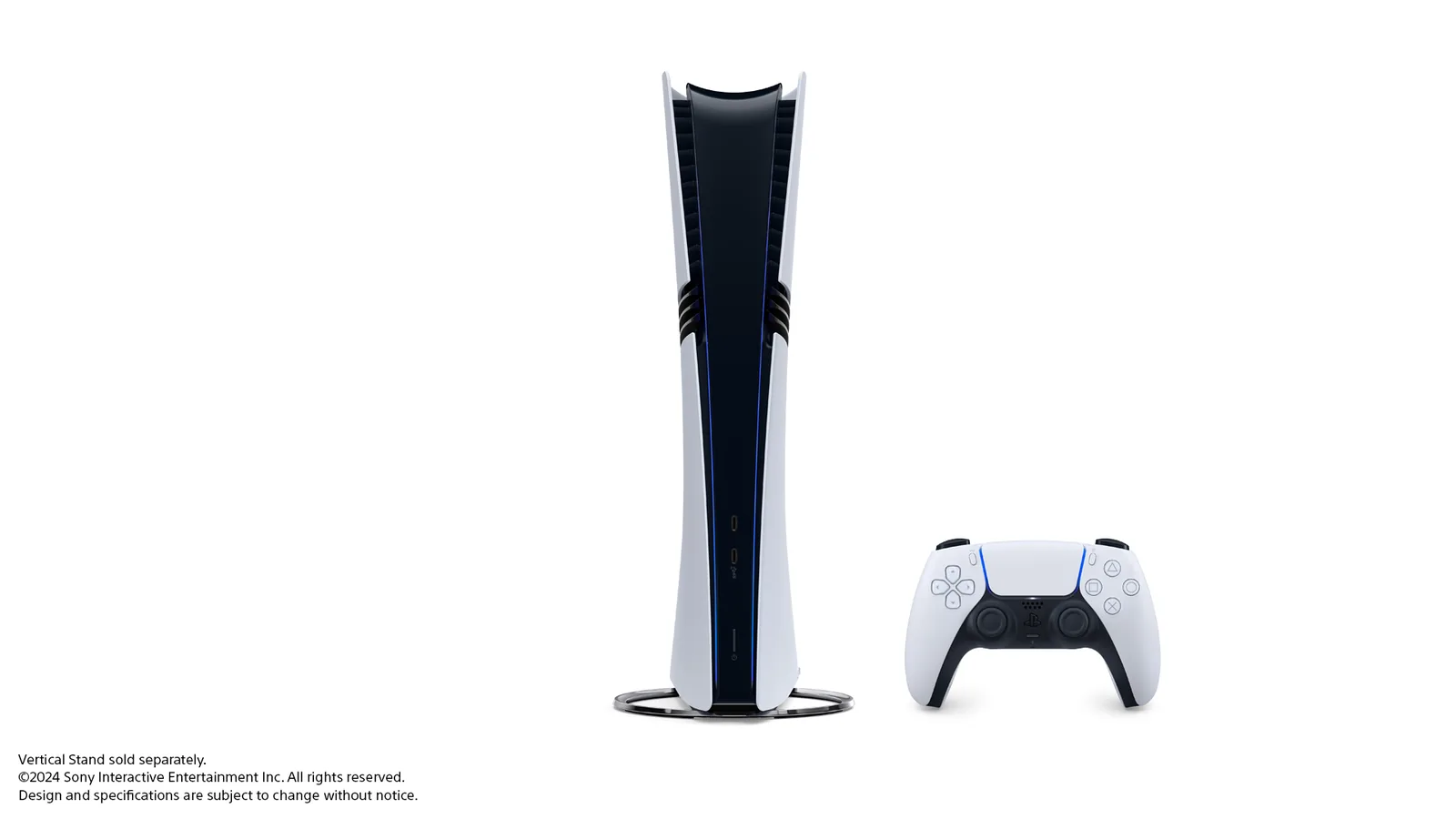
When players booted up their first wave of enhanced games on the PlayStation 5 Pro, the visual leap was undeniable in screenshots. Yet in motion, an irritating problem crept onto 4K displays: fine foliage shimmered uncontrollably, wire fences dissolved into crawling noise, and ray-traced reflections pulsed like a dying bulb. Looking closely at modern PS5 Pro PSSR image quality, Sony did not just tweak a few sliders. System engineers scrapped their original neural network and rebuilt it on a completely different engineering premise.
That gamble paid off. The introduction of upgraded machine learning models, widely documented across technical teardowns as PSSR 2.0, rescued the console from an uncomfortable launch narrative. To see why, look at the mathematical trap that caught Sony's first attempt.
The Fatal Flaw of Pure Convolutional Reconstruction
The first public iteration of PlayStation Spectral Super Resolution attempted an ambitious task. Sony trained a monolithic convolutional neural network to ingest a low-resolution frame, combine it with historical motion vectors, and directly hallucinate high-resolution pixels into the final display buffer.
In sterile training environments, that technique produced razor-sharp edges. Inside dynamic game engines, it broke down. High dynamic range lighting and specular highlights create sharp luminance spikes. When a camera moved through dense grass or rain, the network struggled to blend sub-pixel brightness values smoothly across consecutive frames. The result was temporal fizzle. The model could not tell whether a flickering white pixel was specular glitter or algorithmic hallucination.
Developers faced a harsh dilemma. Games looked softer than native 4K when stationary, and noisy whenever the player touched the analog stick. Something had to give.
Related Hardware Architecture Analysis
Explore our deep dive on modern GPU memory bandwidth and next-generation developer tool efficiency.
How Kernel Networks Redefined PS5 Pro PSSR Image Quality
Sony's breakthrough arrived when researchers changed the question they asked the silicon. Engineers stopped commanding the neural model to paint the final image. Instead, they adopted a kernel-predicting network, commonly abbreviated as KPN.
The difference sounds subtle. In practice, it transforms how compute cycles are spent. In a kernel-predicting architecture, the neural engine never paints a single pixel. Its job is limited to classification: inspecting neighboring pixels, identifying true geometric edges, and outputting mathematical weights (the kernel). Standard fixed-function GPU math then uses those weights to blend historical color samples.
This division of labor solved two massive bottlenecks at once. First, traditional GPU shaders excel at high dynamic range color mathematics without flickering. Second, the machine learning hardware focuses entirely on edge perception and noise suppression. The shimmering foliage vanished. The crawling ray-traced reflections locked into place.
Real-World Testing Across Heavy Game Engines
The practical validation of this architectural shift appears in challenging modern releases. In titles running dense geometric vegetation and complex lighting, such as Final Fantasy VII Rebirth and Monster Hunter Wilds, the revised upscaler demonstrates remarkable stability.
Digital Foundry analysis confirms that games reconstructing from base resolutions as low as 540p or 720p now present stable, high-fidelity geometry on large 4K screens. Where early builds exhibited disocclusion trails behind running characters, the kernel weights cleanly reject stale temporal data. Recent firmware updates enable system-level overrides, bringing these stability improvements to legacy titles without requiring full developer patches.
The Console Upscaling Landscape
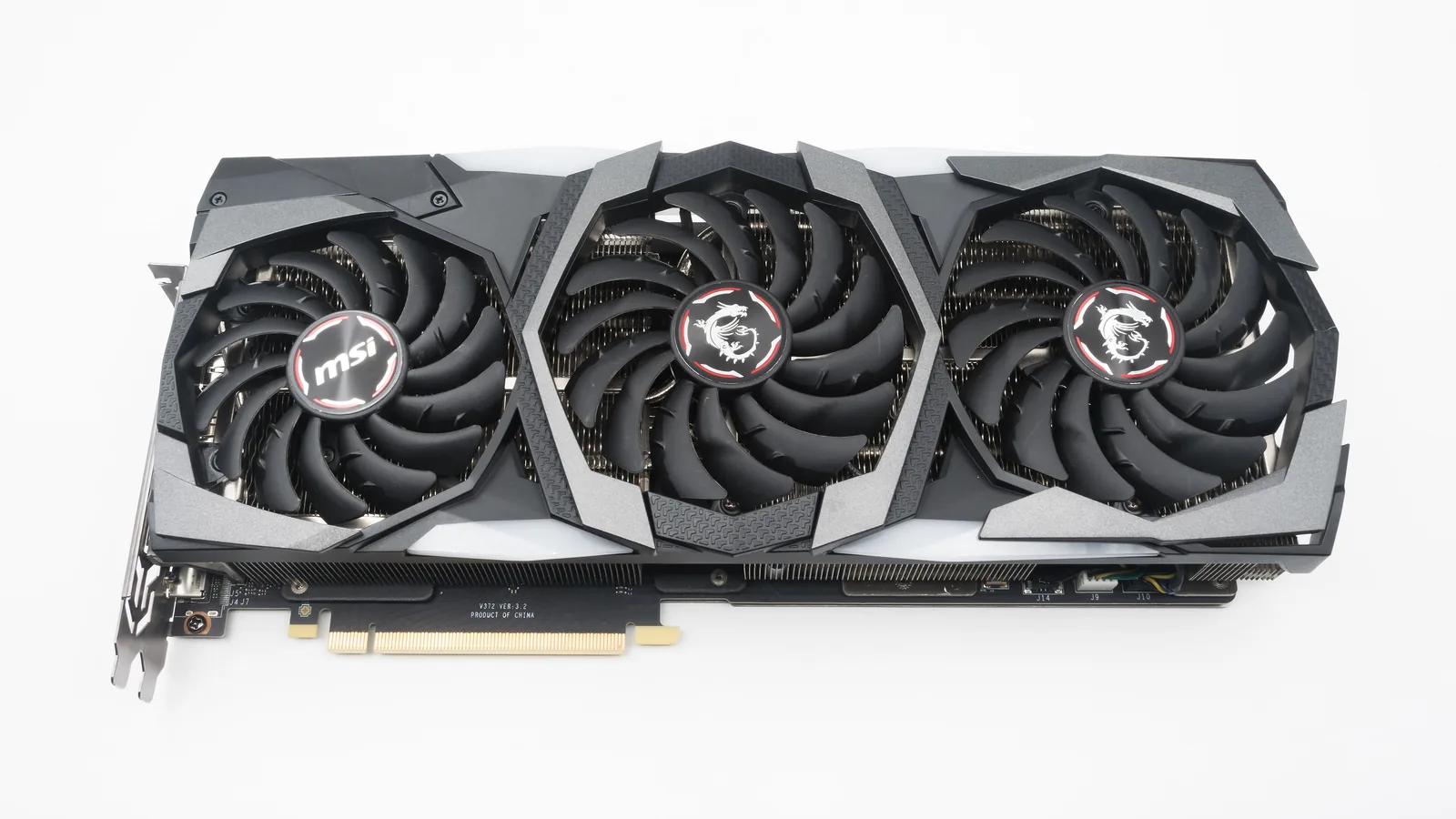
Intellectual honesty requires context. Does PSSR 2.0 beat Nvidia's flagship PC upscaler? In direct side-by-side inspections, Nvidia DLSS still exhibits superior detail retention on complex alpha transparencies, such as chain-link fences viewed against bright skies. Nvidia's massive tensor core arrays on desktop graphics cards carry far more computational horsepower than a console SoC.
That comparison misses the genuine triumph. Sony proved that an affordable living-room console can run proprietary machine-learning reconstruction within a tight two-millisecond frame slice. By abandoning brute-force pixel painting in favor of kernel prediction, Sony eliminated the greatest threat to its mid-generation hardware. The PS5 Pro finally delivers on its original visual promise.

Reader Discussion