

Picture a city after dinner. The signs go dark and the floodlights on offices and landmarks switch off. Streetlights, transit lighting and emergency lighting stay on. In that one-night thought experiment, parts of the sky could get noticeably darker. Whether you see more stars would depend on where you stand, the weather and which lights the city actually turns off.
The sky can respond in minutes
Some outdoor light goes straight upward. Some reflects off pavements and walls. The atmosphere scatters it, creating the pale background that washes out faint stars. When one source disappears, its contribution falls away as soon as the light stops reaching the sky. A brightly lit foreground can still make it hard for someone on the ground to see the difference.
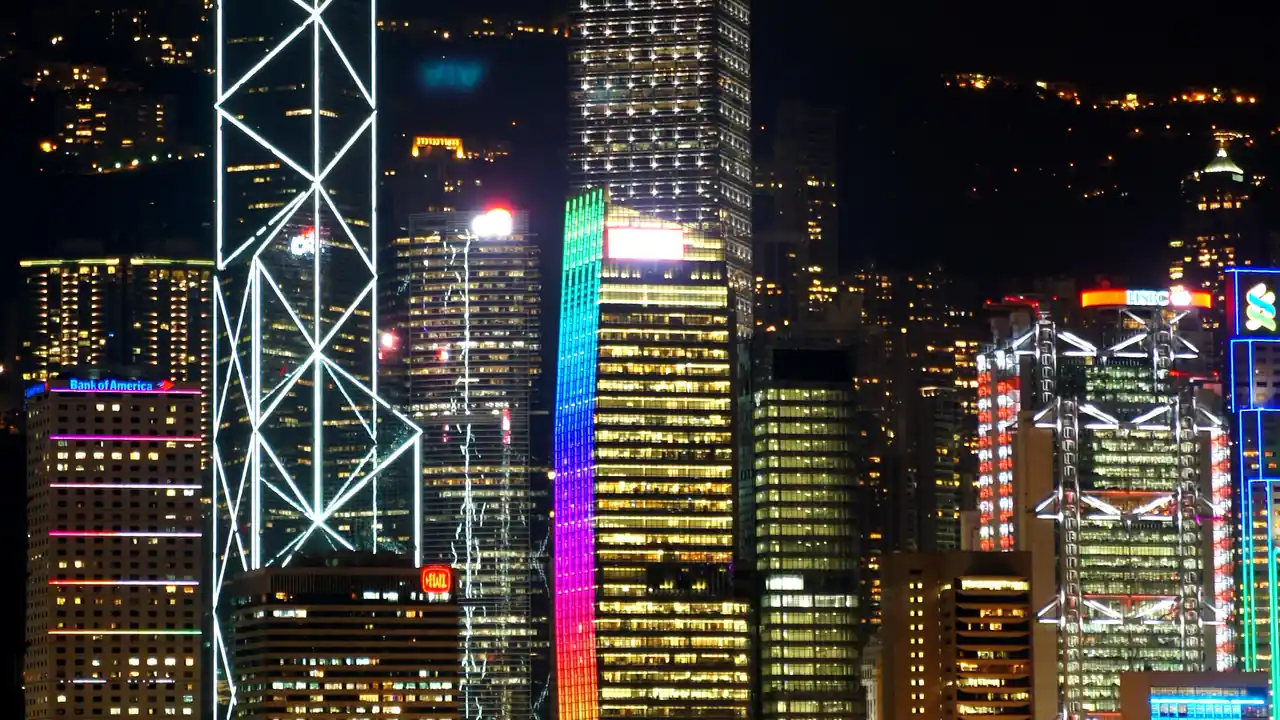
Hong Kong gives us an example close to the premise. Researchers used Earth Hour observations from 2011 to 2024 to track changes in night-sky brightness. They saw up to about 50% darkening in their observations and linked much of the effect to switch-offs at a small number of buildings in business districts. The figure describes changes at the sites and times they measured. Conditions and participation varied, and brightness generally returned when the lights came back.
Which lights matter depends on where you measure
A separate experiment in Tucson, Arizona dimmed municipal streetlights after midnight. The measured sky brightness directly overhead fell about 5% near the centre and about 4% at a nearby suburban site. That experiment varied a different set of lights from the Hong Kong switch-offs, so the percentages answer different questions. A one-night trial answers a more local question. Which light sources make the biggest difference at a specific place?
For comparison, the view behind a harbour with bright façades may change quickly. A residential area where those façades are far away may barely notice. Moonlight, cloud and haze can also change the background, which is why comparing two phone photos with automatic exposure would tell you little by itself.
To see what one night really bought, measure the same patch of sky from the same place before, during and after the switch-off. Keep the settings fixed and record the conditions. The useful outcome is learning which lamps can go dark without removing lighting people rely on.
Cover photo: An archival view of Victoria Harbour at night during regular illumination. Malcolm Koo, CC BY 4.0. Cropped and resized to 16:9, then converted to metadata-free WebP.

Reader Discussion