

Suppose someone sends you a picture of a station clock stopped at noon. The caption says a power cut brought the trains to a halt. You open the image in a credentials viewer and find a signature from a camera. What have you learned? Something about the file. The trains are a separate question.
Content Credentials are records that can travel with a photo. A compatible camera or editing tool can sign information about the file it produced. A viewer can check the signature and show you the recorded steps. If a participating image generator identifies its output as AI-generated, that entry is useful evidence. Plenty of pictures arrive with little or no history, though, including pictures made with ordinary cameras.
Read the entry before trusting the badge
Start with the earliest step you can see. Does it describe a camera capture, a generated image or an export from an editor? Then look at who signed that step. The US Office of Research Integrity describes provenance as a “verifiable record” of where content originated and how it changed. A valid signature on an export tells you about that export. An earlier step may be missing.
Now go back to the station. Even a genuine camera photograph could show a clock waiting for repair, or the same platform a year ago. To establish a power cut you’d want separate evidence, such as a service notice for that station on that date. The photograph and the caption make different claims.
When the only copy is a screenshot
A screenshot creates another file. The original image’s embedded history generally stays behind. The Content Authenticity Initiative’s FAQ explains that some systems can reconnect a copy with a record held elsewhere. Recovery depends on how the image was issued and what the viewer supports.
Ask for the original file or the photographer’s publication link. Open that version in a credential inspection tool and see whether the record goes back further. If the sender has only the screenshot, the most accurate thing you can say is also the simplest: this copy doesn’t settle how the picture was made. And you still need to check what happened to the trains.
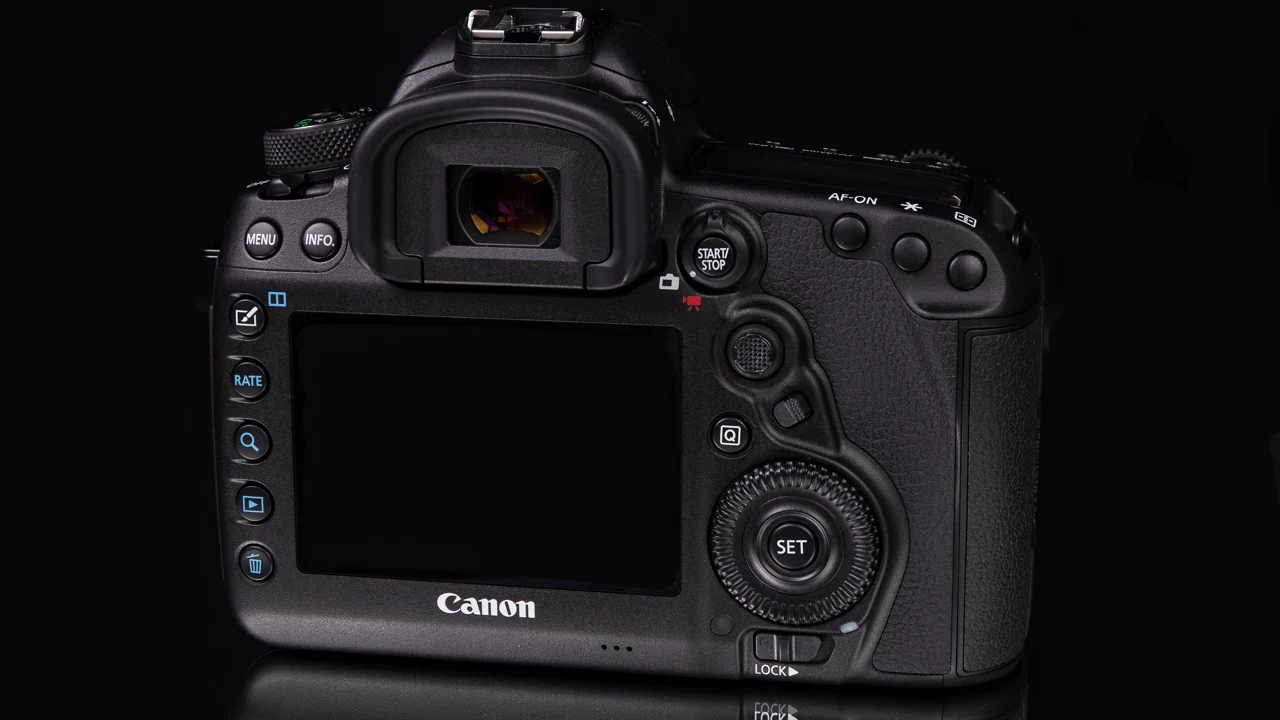
Cover photo: The rear of a Canon EOS 5D Mark IV. This photograph illustrates camera capture and makes no claim about the camera’s signing features. Ansgar Koreng · CC BY-SA 4.0. Cropped and converted to WebP.




Reader Discussion